Crow's feet form earlier than any other wrinkle on the face, and that is not a coincidence. The skin at the outer eye corner is the thinnest on the body, it sits over one of the most mechanically active muscles in the face, and it has almost no structural cushion beneath it. Patients who ask what can be done about these lines often get a single answer from a single provider - botox, or laser, or some vague mention of combination treatment. The more useful answer starts with understanding why the lines are there, how far they have progressed, and which treatments address which part of the problem.
What Crow's Feet Actually Are
The lateral canthus and what makes it structurally unique
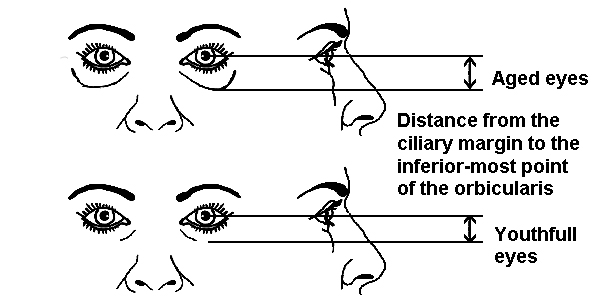
The lateral canthus is the outer corner where the upper and lower eyelids meet. The skin here is the thinnest on the human body - far thinner than cheek skin and a small fraction of the thickness found on the back. Histological studies of eyelid tissue have confirmed that age-related structural loss - depletion of collagen and degradation of elastic fibers - begins in the periorbital zone and progresses faster here than anywhere else on the face.
Two facts explain this vulnerability. First, periorbital skin has virtually no subcutaneous fat beneath it. On the cheek, a fatty layer distributes mechanical stress and provides a scaffold for the overlying surface. At the outer eye corner, there is almost none of that buffer. Second, this skin has very few sebaceous glands. It produces little natural oil and loses moisture readily. Every environmental exposure - sun, salt air, low-humidity interiors - lands directly on a thin, under-supported surface that cannot defend itself the way the rest of the face can.
Collagen production begins its gradual decline in the mid-twenties. Because periorbital skin starts with so little collagen relative to the cheek or forehead, it reaches the visible-wrinkling threshold years earlier. The cheek can absorb a decade of gradual collagen loss before lines appear at rest. The outer eye corner does not have that margin.
The Orbicularis Oculi: The Muscle Behind the Lines
Three zones, and which one creates crow's feet
The orbicularis oculi is a flat, circular muscle that surrounds the eye. It divides into three concentric zones. The pretarsal portion runs along the eyelid margin and drives the spontaneous blink reflex. The preseptal portion lies just outside that. The orbital portion forms the outermost ring - larger, spanning across the zygomatic arch toward the temple and cheek, handling forceful voluntary closure like squinting and laughing.
Crow's feet come from the orbital portion. When it contracts, the fibers pull inward and slightly downward in a fan pattern radiating from the lateral canthus. That anatomy is precisely why crow's feet look the way they do: not a single horizontal crease, but multiple lines fanning outward like spokes. The geometry of the lines maps directly onto the fiber orientation of the muscle producing them.
What constant motion does to thin skin
Humans blink roughly 14,000 to 19,000 times a day. Each blink involves movement at the eyelid margin, and every smile, squint, or expression engages the orbital orbicularis more forcefully. The accumulated mechanical stress on skin that starts thinner, has less underlying support, and produces less protective oil than anywhere else on the face means collagen breakdown here outpaces the rest of the face by years. The structural disadvantage is built in from the start.
Dynamic Versus Static Crow's Feet
This is the single most important distinction in treatment planning, and it is almost never explained in standard aesthetics content.
Dynamic crow's feet appear only when the orbicularis contracts - smiling, squinting, laughing. At rest, the skin surface is smooth. Static crow's feet are present at rest, without any muscle movement. They have been permanently etched into the skin itself.
The mechanism behind the shift is chronic repetitive compression of the dermal collagen network. Every contraction folds the overlying skin. Over years, those folds stop springing back. The collagen permanently shortens and loses elasticity. The line is no longer a muscle event - it is a structural change in the skin, and that changes the treatment entirely.
Botulinum Toxin at the Lateral Canthus
Mechanism and the FDA-approved protocol
Botulinum toxin blocks acetylcholine release at the neuromuscular junction. Without that signal, the orbital orbicularis cannot fully contract. The skin above it stops folding with each expression and, over several weeks, recovers some surface smoothness. For purely dynamic crow's feet, this can produce near-complete clearing.
BOTOX Cosmetic (onabotulinumtoxinA) received FDA approval specifically for lateral canthal lines in 2013, based on two randomized controlled trials enrolling more than 800 adults. The approved protocol distributes injections at three points per side, placed temporal to the lateral orbital rim, to target the orbital orbicularis evenly. For current dosing specifics, consult your provider directly - units are not interchangeable across toxin brands, and protocols can be individualized. Results last several months before retreatment is needed. Patients who maintain consistent treatment over years often notice lines are less prominent even between sessions, reflecting reduced cumulative muscle activity on the skin.
The lateral brow lift: what skilled injectors know
The orbital orbicularis does more than close the eye. Its outermost fibers also pull down on the lateral brow tail, contributing to brow descent over time. When these fibers are relaxed with toxin, the unopposed frontalis - the muscle that elevates the brow - produces a subtle but measurable lift at the brow tail. A skilled injector who understands this anatomy can place lateral orbicularis injections to intentionally enhance this effect. The lift is modest, not dramatic, but it opens the outer eye, reduces lateral hooding, and consistently surprises patients who assumed they needed brow surgery. It is absent from most injection conversations, and most patients never know to ask.
When Toxin Alone Is Not Enough: Resurfacing for Static Lines
Once crow's feet are visible at rest, the problem is in the skin, not just the muscle. Resurfacing addresses that directly - removing damaged outer skin layers, triggering controlled wound healing, and stimulating new collagen production in the dermis.
CO2 laser resurfacing delivers controlled ablative energy that vaporizes the superficial epidermis and heats the dermis to drive remodeling. For lateral canthal lines, well-executed CO2 resurfacing produces a substantial reduction in line depth. Critically, results continue improving for several months after treatment as new collagen matures - the skin at three months post-treatment is measurably better than what was visible at four weeks. Recovery involves redness, flaking, and a period of sun sensitivity. The periorbital area heals well but requires diligent protection throughout. A patient with only dynamic lines and no static component does not need this level of intervention - accurate staging before any recommendation is made is what prevents overtreatment on one end and undertreatment on the other.
The shift from dynamic to static crow's feet is not a cosmetic category distinction - it is a structural change in dermal architecture that requires a correspondingly different treatment strategy.
Skin Type and Safety: The South Florida Consideration
Why full-ablation CO2 is not appropriate for all patients
Full-ablation CO2 laser carries a significant post-inflammatory hyperpigmentation (PIH) risk for patients with melanin-rich skin. For patients classified as Fitzpatrick type III and above - a large share of South Florida's patient population, given the region's Latin American, Caribbean, South Asian, and African-descended communities - full ablative CO2 is generally contraindicated for periorbital resurfacing. Melanocytes in darker skin are more reactive to thermal injury, and the resulting hyperpigmentation can be more disfiguring than the original lines.
Safer alternatives for Fitzpatrick III-IV include fractional CO2, which ablates micro-columns of tissue while leaving surrounding skin intact to accelerate healing and reduce PIH risk, and Er:YAG laser, which has a shorter thermal relaxation time and produces less collateral heating. For Fitzpatrick IV through VI, radiofrequency microneedling is the preferred energy-device option for periorbital collagen remodeling.
RF microneedling across the Fitzpatrick spectrum
Radiofrequency microneedling delivers RF energy through insulated needles that penetrate the dermis. Because energy is deposited below the epidermis, the melanocyte-rich surface layer is largely spared. This makes it safe across a wide range of skin types, including Fitzpatrick IV-VI patients that ablative lasers cannot reliably treat. Collagen remodeling with RF is more gradual than with ablative laser, and multiple sessions are typically needed. For the right patient, it is the correct path - meaningful results without pigmentation risk.
| Treatment | Primary target | Suitable skin types | Recovery |
|---|---|---|---|
| Botulinum toxin | Dynamic muscle contraction | All Fitzpatrick types | Minimal |
| Full-ablation CO2 laser | Static skin texture, collagen remodeling | Fitzpatrick I-II | Extended, significant |
| Fractional CO2 / Er:YAG | Static lines, surface texture | Fitzpatrick I-III (selected IV) | Moderate |
| RF microneedling | Dermal collagen remodeling | All types; preferred for IV-VI | Minimal to moderate |
Combination Treatment and Sequencing
No single treatment covers every mechanism behind established crow's feet. Toxin stops the muscle. Resurfacing or RF remodels the skin. Combining them addresses both, and the order matters.
- Start with botulinum toxin. Treating the muscle first reduces ongoing mechanical stress on the skin during the resurfacing recovery window. An orbicularis that is not fully contracting is not repeatedly folding newly remodeled tissue while it heals.
- Allow two weeks for toxin to reach full effect. Complete neuromuscular blockade takes approximately two weeks to develop. Beginning laser or RF before this period means the muscle is still active during healing - working against the treatment rather than alongside it.
- Perform the resurfacing or RF procedure. With muscle activity reduced, the treated skin is in its most stable state for healing and collagen deposition. The static component that toxin alone cannot clear is addressed at this step.
- Maintain toxin on schedule thereafter. Resurfacing produces lasting structural improvement, but the orbital orbicularis never stops contracting. Ongoing toxin maintenance prevents the re-accumulation of dynamic lines that would otherwise etch new static changes into the remodeled skin over time.
Patients with Fitzpatrick IV-VI follow the same sequence but substitute RF microneedling for ablative laser at step three. The principle holds; the device changes.
What Oculoplastic Expertise Adds
Periorbital injections are not equivalent to injections elsewhere on the face. The orbital septum, the lacrimal gland, and branches of the facial nerve all lie within or adjacent to the treatment zone. Correct anatomy knowledge is not optional here - it is what separates safe technique from one that risks complications a generalist injector may not recognize until they have already occurred.
- Dry-eye evaluation before any periorbital energy treatment: laser and RF near the lower lid can worsen pre-existing dry eye. Patients with meibomian gland dysfunction need this identified and managed before any device treatment proceeds.
- Lower lid tone assessment: some patients presenting with crow's feet also have early lower lid laxity. Adding resurfacing or RF without assessing lid mechanics can exacerbate existing laxity. Oculoplastic evaluation separates candidates from non-candidates before a device touches the skin.
- Anatomic variant recognition: the lacrimal gland can descend with age, placing it closer to standard injection points. An oculoplastic surgeon identifies this on examination where a standard aesthetics provider may not.
- Surgical option awareness: for patients with severe or treatment-resistant crow's feet that have not responded adequately to well-performed combination treatment, a partial lateral orbicularis myectomy - surgical removal of a segment of the orbital orbicularis - can produce lasting improvement. This option is almost never discussed in aesthetics contexts because most aesthetics providers do not perform eyelid surgery. For a small but real subset of patients, it is the right answer, and it belongs in a complete treatment algorithm.
What to Expect at Consultation
A thorough consultation covers more than product selection. These are the factors that actually determine which plan is appropriate:
- Dynamic versus static staging: lines assessed at rest and during animation. The presence of static lines at rest changes the plan fundamentally - toxin alone is no longer sufficient.
- Fitzpatrick skin type: not a cosmetic preference but a safety determination that gates which energy devices are appropriate at all.
- Brow position: a low lateral brow changes injection strategy. Patients hoping to gain brow lift from toxin need a different injection map than those with normal brow position.
- Lower lid tone: assessed before any energy device recommendation is made.
- Treatment history: prior isotretinoin use affects resurfacing candidacy. Prior filler in the periorbital area affects injection planning.
For patients with purely dynamic lines and no static component, the timeline from first toxin treatment to optimal result is measured in weeks. For patients with established static lines requiring combination treatment, realistic timelines run several months - collagen remodeling from resurfacing or RF does not fully mature immediately. Setting that expectation at the consultation, with clarity about what will look different at which point, is part of what makes a consultation useful rather than just optimistic.
The goal is not to eliminate all lateral canthal movement. Some expressiveness is healthy and expected. The goal is skin that looks rested and smooth rather than aged - achieved with tools matched to the specific anatomy, skin type, and stage of the problem in front of you.
Frequently Asked Questions
Can crow's feet come back after treatment?
Botulinum toxin wears off as nerve function gradually recovers, and retreatment on a regular schedule is needed to maintain results. Resurfacing and RF produce longer-lasting structural change in the skin, but the underlying orbicularis never stops contracting. Without ongoing toxin maintenance, new dynamic lines will eventually etch fresh static changes into the remodeled skin. The combination approach - toxin plus skin-level treatment, maintained over time - produces the most durable outcomes.
Why is one side of my face developing crow's feet faster?
Asymmetric progression is common. Sleeping position, dominant expression habits, and uneven sun exposure all contribute. In Florida specifically, one-sided sun exposure through a car window is a frequent culprit. Treatment can be individualized by side - the injection protocol is not required to be identical bilaterally, and an experienced injector will assess each side on its own terms.
I have darker skin and was told laser is not an option for my crow's feet - is that the whole story?
Full-ablation CO2 laser does carry a real post-inflammatory hyperpigmentation risk for Fitzpatrick III-VI patients, and that concern is legitimate. It does not mean no energy-device option exists. Fractional resurfacing is appropriate for some Fitzpatrick III-IV patients under the right conditions, and RF microneedling is safe across all skin types including Fitzpatrick VI. A provider with genuine experience in diverse skin types can assess your individual candidacy rather than applying a blanket exclusion.
Will treating my crow's feet affect my blink or eye closure?
When botulinum toxin is placed at the lateral orbital rim to target the orbital orbicularis, it does not reach the pretarsal portion that drives the spontaneous blink reflex under correct technique. Blinking and normal eye closure are not affected. This is why injection placement depth matters - it is why periorbital injections specifically benefit from a provider who understands the functional anatomy of the eyelid, not only the cosmetic surface.
When is the right time to start crow's feet treatment?
The more useful signal than age is the stage of the lines. Purely dynamic crow's feet that appear only with expression and fully resolve at rest are an early presentation where botulinum toxin alone works well. Starting at this stage also means a simpler plan and lower intervention burden over time, because the static component has not yet developed. Some patients in their late twenties are already candidates; others in their fifties have only mild dynamic lines. The exam finding matters more than the birthdate.
Is the surgical myectomy option only for people who have had complications from injections?
No. Partial lateral orbicularis myectomy for crow's feet is indicated for patients with severe or structurally prominent lateral canthal lines that have not responded adequately to well-performed combination treatment - not as a salvage procedure after something went wrong. It is a planned surgical option for a specific subset of patients, and it produces lasting improvement where repeated toxin and resurfacing cycles have been insufficient. It is rarely discussed outside oculoplastic practice because most aesthetics providers do not perform eyelid surgery, but it belongs in any complete treatment algorithm.
General information only, not medical advice. Individual anatomy and healing vary. See the disclaimer.