Most of what patients find when they search for plasma pen eyelid treatment is written by the people selling the service. The gap matters, because the eyelid is genuinely different from every other site where this device is used - different anatomy, different injury pathways, and a structural mismatch between what plasma pen can change and what actually causes many upper eyelids to look heavy. What follows is a plain assessment of the mechanism, the evidence, the regulatory status, and the specific risks that appear only when the device moves within centimeters of the cornea.
The Physics of the Plasma Arc
A plasma pen works by ionizing the atmospheric gas between a charged metal probe tip and the skin surface. That ionization produces a narrow, superheated plasma arc. When the arc contacts tissue, it does not burn in the conventional sense - it sublimates. Targeted cells convert directly from solid to gas, skipping the liquid phase. No heat spreads laterally the way laser energy diffuses through water in tissue. The damage is confined to the contact point, leaving a micro-crater roughly half a millimeter to one millimeter wide.
As that crater heals, two things happen simultaneously. The surrounding skin contracts inward toward the wound edge, producing an immediate tightening effect. The repair process also recruits fibroblasts, which deposit new collagen over the following weeks and months. A 2020 prospective study confirmed this histologically, documenting new collagen fiber formation in treated dermis - evidence of genuine structural remodeling, not simply post-inflammatory swelling. The tightening effect is real. So is its ceiling.
How Sublimation Differs from Laser and RF Microneedling
Ablative laser resurfacing vaporizes tissue using photon energy absorbed by water; energy delivery can be calibrated to specific dermal depths with high reproducibility, and lateral heat spread is controlled by pulse parameters. Radiofrequency microneedling heats the deeper dermis through electrical resistance at needle depth, below the skin surface. Plasma pen is a surface and superficial-dermal treatment. It does not reach the orbicularis muscle. It does not reach orbital fat. On most body sites, that depth limitation is simply a characteristic of the device. On the eyelid, it defines exactly which patients will benefit and which will not.
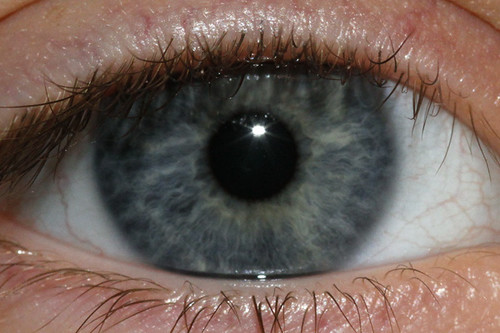
Eyelid Anatomy: Why Periorbital Plasma Carries Risks No Other Treatment Site Shares
Eyelid skin is the thinnest on the human body - clinical ultrasound studies place the upper eyelid at roughly 0.5 to 0.6 millimeters, less than one millimeter at any site. Below it sits the orbicularis muscle, and below that the orbital septum, fat pads, and levator muscle. The margin between the skin surface and structures that must not be disturbed is nearly zero. When treating the abdomen or neck, an operator working at slightly wrong depth has centimeters of subcutaneous tissue as a buffer. That buffer does not exist on the upper eyelid.
The cornea adds a second layer of risk unique to this area. A plasma arc that contacts the cornea, or that arcs to the eye surface rather than the skin, can cause an irreversible thermal corneal burn. Corneal shields placed inside the eye are the standard protective measure for any periorbital energy procedure. Many non-medical providers do not use them, and their absence is invisible in before-and-after photographs.
What the Clinical Evidence Shows - and Who It Actually Applies To
The peer-reviewed record on plasma fibroblast for eyelid skin is real but comes with a specific patient profile that promotional content routinely omits. Peer-reviewed studies have found meaningful improvement in upper-lid skin redundancy in the majority of subjects treated for mild-to-moderate dermatochalasis - check with your provider for current literature, as the evidence base has grown in recent years. A 2020 prospective study added 12-month durability data and histologic confirmation of new collagen formation. Those are meaningful results.
They apply to patients who fit this description:
- Mild to moderate skin laxity only - not significant ptosis or fat herniation
- Good residual skin elasticity, with tissue that springs back when gently pinched
- No meaningful orbital fat prolapse contributing to visible fullness
- No brow descent pulling excess tissue over the lid margin
- No levator muscle weakness affecting the resting position of the lid itself
Outside that profile, plasma pen does not fail because of poor technique. It fails because the anatomy driving the appearance is not skin laxity, and the device cannot reach what is actually causing the problem.
The Four Causes of Eyelid Hooding - and the One Plasma Pen Can Reach
Upper eyelid heaviness has four distinct anatomical drivers. A treatment that targets only one of them is structurally irrelevant for the other three, regardless of how many sessions a patient undergoes.
| Cause | What It Looks Like | Plasma Pen Effective? | Surgical Solution |
|---|---|---|---|
| Excess skin (dermatochalasis) | Crepe-like folds, skin resting on lashes | Yes - mild to moderate only | Upper blepharoplasty |
| Herniated orbital fat | Distinct puffiness that does not compress away | No - fat is untouched | Blepharoplasty with fat management |
| Levator weakness (ptosis) | Lid margin covering the upper pupil border | No - muscle not addressed | Ptosis repair via levator advancement |
| Brow descent | Brow tail at or below the orbital rim | No - brow position unchanged | Brow lift or lateral brow fixation |
The correct sequence is diagnosis first, treatment second. An exam that identifies which anatomical driver is causing a patient's specific appearance takes minutes and determines whether plasma pen is appropriate or irrelevant before any money is spent.
Patients with orbital fat herniation who choose plasma pen over surgery will see no change in the fat component. The device does not enter the orbital septum. That outcome is entirely predictable and entirely avoidable with a proper pre-treatment exam - which is why the exam must come first.
FDA Regulatory Status: How to Read Device Marketing Claims
FDA 510(k) clearance, when a device holds it, authorizes marketing for a specific indicated use - typically cutaneous lesion removal for plasma-class devices. It does not mean the device has been evaluated for cosmetic eyelid skin tightening. All cosmetic eyelid applications are off-label uses the FDA has never reviewed for safety or efficacy in that context. A provider who claims a device is "FDA cleared" for eyelid lifting is either misstating the clearance or misunderstanding what clearance means.
In 2022, the FDA issued a formal warning letter to a plasma device manufacturer (Med Pen Concepts LLC), citing devices marketed without required premarket approval. That action reflects a broader pattern: many plasma pen devices sold and used for cosmetic periorbital treatment have no regulatory pathway supporting that application at all. Patients can ask any provider for the specific clearance number and the indication it covers. If the indication listed is lesion removal, the cosmetic eyelid claim is off-label and unevaluated.

Skin Type and Post-Inflammatory Hyperpigmentation - A Risk South Florida Patients Must Weigh
Post-inflammatory hyperpigmentation is the most common lasting complication of plasma fibroblast treatment. It occurs when the healing process deposits excess melanin at the treatment site, leaving dark marks that can persist for months or longer. The risk rises sharply with darker complexions - not marginally, but significantly.
Fitzpatrick phototype is the clinical scale that classifies skin response to UV exposure. Types IV through VI cover olive, brown, and deep brown to black complexions - the skin tones that represent a large share of South Florida's Hispanic, Caribbean, and Black patient populations. For patients in these categories, plasma pen carries meaningfully higher PIH risk than for lighter skin types. That is not an absolute reason to refuse treatment, but it demands a direct, detailed conversation before proceeding - and a realistic commitment to post-procedure sun avoidance that many patients in this region are not warned about upfront. Six months of strict sun restriction in South Florida, where outdoor exposure is nearly year-round, is not a minor afterthought. It is a genuine lifestyle condition attached to the procedure.
Recovery Reality: What the Healing Window Actually Requires
Plasma pen eyelid recovery does not follow the gentle arc that social media posts suggest. Here is what the sequence actually looks like:
- Micro-craters form at treatment points immediately and scab over within 24 hours.
- Scabs remain on the skin surface for 7 to 14 days and must not be picked or removed early.
- Underlying swelling and pinkness resolve over several weeks as the acute inflammatory phase clears.
- Full collagen remodeling continues for months; final results are typically assessed at three to six months post-treatment.
- Strict sun avoidance - limiting direct exposure, not just applying sunscreen - is required for up to six months to prevent PIH at treated sites.
Compare that to upper blepharoplasty: most patients return to normal activity within one to two weeks, residual swelling clears within a few weeks, and there is no months-long vulnerability to sun-triggered pigmentation. Surgical results are commonly reported to last many years, with most patients experiencing benefits for five to ten years or longer; lower blepharoplasty with fat repositioning is often considered permanent once the repositioned fat heals in place. Plasma pen results typically require retreatment every two to three years. A patient who retreats once over a six-year period accumulates more total recovery time than a single surgical procedure would have required - a comparison rarely included in the consultation.
The Decision Framework: When Plasma Pen Is Defensible and When Surgery Is the Only Answer
Exam Findings That Support Plasma Pen as a Reasonable Option
- Mild to moderate skin laxity confirmed on physical exam, with no significant fat or muscle component identified
- Good skin elasticity - tissue rebounds promptly when gently displaced
- Patient is not a surgical candidate due to medical factors
- Patient understands the longevity difference relative to surgery and accepts periodic retreatment
- Fitzpatrick type I through III, or a type IV through VI patient who has received explicit PIH counseling and commits to the full post-care protocol
Exam Findings That Make Surgery the Only Logical Choice
- Visible orbital fat prolapse - a distinct bulge that does not compress away with gentle pressure
- True ptosis - lid margin sitting at or partially covering the pupil at rest
- Brow position at or below the orbital rim, contributing to perceived upper-lid fullness
- Significant skin redundancy crossing or touching the lash line, beyond the mild-to-moderate range
- Prior plasma pen sessions that did not produce lasting improvement, suggesting skin laxity was not the primary driver
The single most useful step any patient can take before an eyelid treatment consultation is asking the provider to identify which of the four anatomical causes is driving their specific appearance. A provider who answers that question clearly - based on a physical exam, not a photograph - is positioned to recommend a treatment that matches the anatomy. One who cannot answer it is not.
Frequently Asked Questions
Is plasma pen eyelid treatment FDA approved?
No plasma pen device holds FDA approval or clearance specifically for cosmetic eyelid skin tightening. Some devices carry 510(k) clearance for cutaneous lesion removal, which is a different indication entirely. All cosmetic eyelid applications are off-label uses the FDA has not reviewed for this purpose. Ask any provider to produce their device's clearance documentation and confirm what the cleared indication actually states.
How long do plasma pen eyelid results last compared to blepharoplasty?
Plasma pen results for eyelid skin laxity typically hold for two to three years before retreatment is needed. Surgical upper blepharoplasty results are commonly reported to last many years - most patients experience benefits for five to ten years or longer - and lower blepharoplasty with fat repositioning is often considered permanent once the repositioned fat has healed in place. A patient who retreats once over that span may accumulate more total recovery time than a single surgical procedure would have required - a comparison worth making before choosing the non-surgical route.
Can plasma pen treat under-eye bags?
Only under specific circumstances. If the primary component is loose lower-lid skin, some improvement is plausible. If the main driver is orbital fat herniation - a distinct forward bulge from fat behind the orbital septum - plasma pen will produce no change in that component, because the device works at the skin surface and cannot reach the fat. A physical exam distinguishes the two before any treatment is selected, which is why that exam should happen first.
Why is plasma pen riskier near the eye than on other parts of the body?
Eyelid skin is the thinnest on the human body, leaving almost no margin between the device and underlying structures that must not be disturbed. The cornea is centimeters away and vulnerable to irreversible thermal burns if the arc or its electrical current reaches it. Beyond the device itself, the topical anesthetics used before treatment can enter the eye and cause chemical injury - a risk documented in peer-reviewed literature that simply does not exist when treating the neck or abdomen.
Is plasma pen safe for patients with darker skin tones?
Patients with Fitzpatrick types IV through VI face higher risk of post-inflammatory hyperpigmentation - dark marks that can persist for months following treatment. This risk is particularly relevant in South Florida, where a large share of patients have Hispanic, Caribbean, or Black complexions that fall in these categories. It is not a categorical contraindication, but it requires explicit pre-procedure counseling and a strict sun-avoidance commitment extending several months after treatment.
What questions should I ask before a plasma pen eyelid consultation?
Four questions cover the essentials: Which specific anatomical cause is driving my eyelid appearance, and how did you determine that? What FDA clearance does this device carry, and what indication does it cover? Will corneal shields be placed during the procedure? And what is the exact post-care sun-avoidance protocol for my skin type? A provider who answers all four directly - including acknowledging the off-label nature of cosmetic eyelid applications - understands the treatment's limits as clearly as its potential.
General information only, not medical advice. Individual anatomy and healing vary. See the disclaimer.