Every blepharoplasty patient eventually asks the same question: how long will this last? The answer surgeons most often give - five to ten years - is not wrong, but it explains almost nothing. That range collapses upper and lower eyelids into one number, ignores the biology of why laxity returns, and says nothing about the habits and environmental exposures that push a patient toward the short end. More to the point, it misses an entire category of apparent recurrence that has nothing to do with the eyelids themselves.
Why There Is No Single Answer
Upper and lower eyelids age by fundamentally different mechanisms, and that difference shapes how long each surgical result holds. Upper lid blepharoplasty primarily addresses dermatochalasis - excess skin that accumulates as thin upper lid tissue loses structural integrity. The dominant problem is skin, so longevity is a skin story: how fast does the remaining skin lose collagen and elastin, and when does cumulative loss become visible as new hooding?
Lower lid changes are more complex. The lower lid involves skin, muscle tone, fat compartment position, midface support, and the relationship between the lid margin and the globe. When fat herniation is the primary concern, outcome durability depends on whether fat was removed or repositioned - and on whether the midface structures supporting the lower lid continue their own descent over time.
One fact applies to both lids and is the most important thing to understand about longevity: the tissue removed during blepharoplasty does not grow back. Skin cannot regenerate the specific cells that were excised. Fat pockets, once removed or repositioned, do not reconstitute. What returns is new laxity - new collagen loss, new fat migration, new soft-tissue descent - in the tissue that remains. The clock restarts; it does not rewind.

The Biology of Fading Results
Why Periorbital Skin Ages Faster Than the Rest of the Face
Skin maintains its structure through a scaffold of collagen and elastin fibers in the dermis. Collagen provides tensile strength; elastin allows recoil. Both degrade continuously with age, but the rate is not uniform across the face. Eyelid skin is among the thinnest on the human body - less than 1 mm in most areas and under 0.5 mm at its thinnest points. It contains fewer sebaceous glands than cheek or forehead skin and has less intrinsic photoprotection. Those structural differences make it disproportionately vulnerable to collagen loss compared to adjacent facial areas. The same UV dose that causes moderate damage on the cheek causes proportionally greater damage at the lid.
Intrinsic Aging Versus Photoaging
Intrinsic aging - the biological clock operating independently of environment - degrades collagen at a measurable but relatively slow rate. Photoaging is a different, more aggressive process. UV radiation activates matrix metalloproteinases (MMPs), particularly the enzyme collagenase, which actively dismantles the existing collagen network rather than simply slowing its production. Research attributes up to 80-90% of visible skin aging to cumulative UV exposure rather than intrinsic chronological aging. That figure reframes most of what patients experience as results fading: it is largely a modifiable, environmentally driven process, not an inevitable countdown.
Research attributes up to 80-90% of visible skin aging to cumulative UV exposure rather than intrinsic chronological aging - making photoprotection the single most effective non-surgical tool for preserving blepharoplasty results.
Upper Eyelid Longevity: What the Clinical Data Show
A clinical series of 100 consecutive secondary upper lid blepharoplasties published in Plastic & Reconstructive Surgery provides the most specific longevity data available. The median interval between primary and secondary surgery in that series was 8.7 years, with a range of 2 to 22 years. Secondary upper lid procedures accounted for 10% of all upper lid blepharoplasties performed over the 22-year study period.
The 2-to-22-year range is the more instructive number. It reflects how much individual variation exists in the rate of periorbital aging and makes clear that longevity is shaped by a combination of factors, not simply the passage of calendar time.
How Age at Surgery Shapes the Trajectory
Age at the time of surgery is a meaningful predictor. A patient operated on in their mid-40s still faces 30 to 40 years of ongoing facial aging; recurrence within a decade is likely. A patient operated on at 65 faces a slower rate of residual change, and some never require a second procedure because the pace of change stays below the threshold of noticeable appearance. This is not an argument against earlier surgery - there are real quality-of-life reasons to address functional or cosmetic concerns when they arise - but it shapes realistic expectations. Younger patients are buying years of improvement, not a permanent result.
Lower Eyelid Longevity: Fat Changes vs. Skin Changes
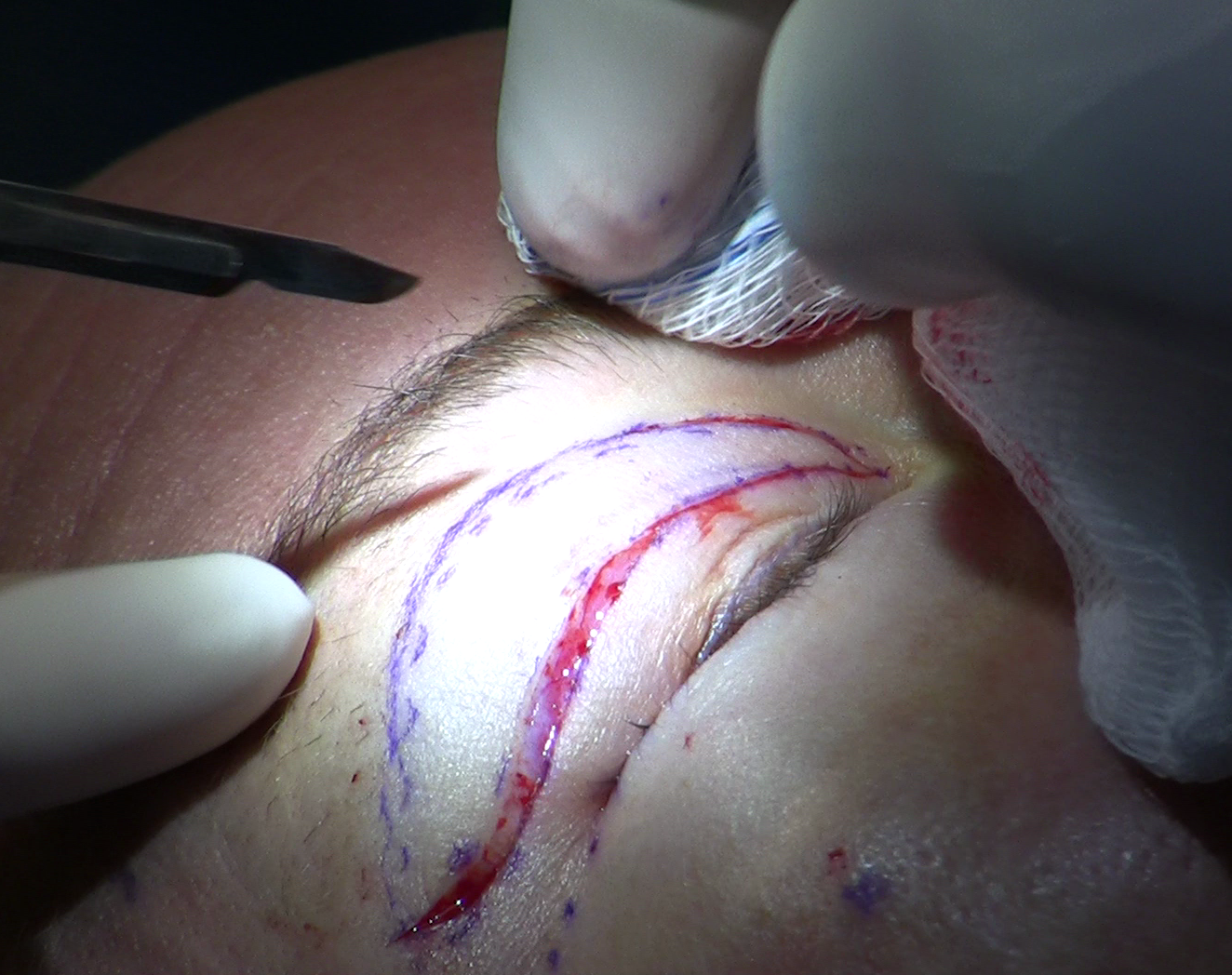
Long-term outcome data for lower lid blepharoplasty are more limited than for the upper lid. A comprehensive review in the Aesthetic Surgery Journal covering 49 studies and over 10,000 patients found mean published follow-up of under 15 months, and concluded that the longevity of the procedure is poorly supported by long-interval photographic evidence in the literature. Clinical experience and longer follow-up series consistently suggest that lower lid results tend to show measurable change earlier than upper lid outcomes - likely reflecting the greater anatomical complexity of the lower lid and the ongoing role of midface descent in eroding earlier results - though individual timelines vary considerably and well-documented long-term studies remain scarce.
Fat Removal Versus Fat Repositioning
Traditional lower lid blepharoplasty excised herniated orbital fat to eliminate bulging. Fat repositioning - mobilizing that fat over the orbital rim to fill the tear trough rather than discarding it - became more widely adopted from the early-to-mid 1990s onward, following the work of surgeons including Hamra. Repositioned fat is thought to age more gracefully because it addresses both the bulge and the hollow simultaneously, and preserved fat volume maintains periorbital contour as the midface gradually descends. Peer-reviewed outcome data beyond 10 years for repositioning remains limited because the technique has not been in widespread use long enough to generate robust long-term studies.
Pure fat excision carries a documented risk of a hollowed, skeletonized appearance over time as the midface descends and volume decreases with age - an outcome that can look over-corrected even without new skin laxity returning.
The Brow Descent Problem: Apparent Recurrence That Is Not Recurrence
One of the most common sources of confusion after upper blepharoplasty is the reappearance of upper lid hooding that has nothing to do with new skin excess. The mechanism is brow descent driven by frontalis relaxation.
Before surgery, many patients unconsciously recruit the frontalis - the forehead muscle responsible for brow elevation - to lift heavy upper lids. This compensation holds the brow above its true resting position. After blepharoplasty removes the excess skin, the mechanical need for frontalis recruitment disappears and the muscle relaxes. A study published in PMC, titled 'Brow Ptosis after Upper Blepharoplasty: Findings in 70 Patients,' documented this phenomenon directly: the brow descends post-operatively in a significant subset of patients, sometimes below its pre-operative position, re-creating the visual impression of hooding even when the operated skin is entirely unchanged.
This distinction has direct practical consequences. A patient who returns two years after surgery with apparent hooding may not have experienced true skin recurrence at all. The skin may still be in excellent condition, and what has changed is brow position. A surgeon who does not carefully evaluate brow position before revision risks operating on a problem that skin excision will not solve - and risks removing tissue that was never the source of the concern.
What Shortens Results
The South Florida UV Factor
South Florida's UV index regularly reaches extreme levels on sunny days and stays elevated year-round. Residents accumulate a substantially higher annual UV dose than patients in most U.S. cities - a population-level factor that creates a genuine regional longevity disadvantage. The thin, gland-poor eyelid skin takes that UV hit continuously without the seasonal reprieve that northern climates provide, accelerating the MMP-mediated collagen breakdown that drives recurrence.
Factors That Accelerate Recurrence
- Chronic unprotected sun exposure: activates MMPs directly, dismantles the periorbital collagen scaffold, and is the single most significant modifiable risk factor
- Smoking: independently inhibits collagen synthesis and activates MMPs, compounding collagen loss through two separate mechanisms
- Significant weight fluctuation: orbital fat volume changes with body weight; repeated gain-loss cycles stress periorbital skin and fat compartments
- GLP-1 drug use with rapid weight loss: fast fat depletion in the periorbital region can destabilize results from both upper and lower procedures
- Younger age at surgery: more future aging years mean a higher probability of eventual recurrence within the patient's lifetime
- Genetic predisposition: familial patterns of early dermatochalasis are well-recognized, and patients with a strong family history tend to follow a similar timeline
The Maintenance Menu
No single maintenance strategy works for every type of early change. The right tool depends on what is changing - skin laxity, collagen quality, brow position, or some combination - and how far that change has progressed. The table below maps each option to what it actually addresses.
| Treatment | What It Addresses | Time to Full Effect | Surgical Threshold Required? |
|---|---|---|---|
| Fractional CO2 laser resurfacing | Residual wrinkles, skin texture, mild laxity, collagen rebuilding | Weeks to months; collagen builds for 3-6 months | No - used before surgical threshold |
| Radiofrequency microneedling | Early skin laxity, dermal collagen and elastin remodeling | Full effect at 3-6 months | No - effective before skin excess returns |
| Botulinum toxin brow elevation | Brow-driven pseudorecurrence, lateral brow descent | Days; lasts 3-4 months per cycle | No - delays repeat surgery in brow-descent cases |
| Targeted periorbital skincare | Ongoing MMP suppression, collagen support, photoprotection | Cumulative over months and years | Not applicable - preventive |
| Repeat blepharoplasty | True skin excess, fat changes, functional obstruction | Immediate structural correction | Yes - sufficient tissue required for safe excision |
CO2 Laser Resurfacing
Fractional CO2 laser resurfacing stimulates neocollagenesis in the periorbital dermis and has demonstrated improvement in residual wrinkles, skin tone, and mild laxity in PMC-indexed post-blepharoplasty studies. Most surgeons defer laser to at least 3-6 months post-operatively to allow full tissue healing. Used proactively before laxity reaches surgical threshold, it can meaningfully extend the interval before a repeat procedure becomes appropriate.
Radiofrequency Microneedling
RF microneedling delivers radiofrequency energy into the dermis via insulated needles, producing immediate collagen contraction followed by sustained neocollagenesis and elastin remodeling over 3-6 months. It is specifically used as maintenance after surgical periorbital rejuvenation when early laxity is present but has not yet reached the amount that would justify surgery. It does not replace surgery for true skin excess, but it intercepts early-stage recurrence effectively.
Botulinum Toxin for Brow Position
Botox injected into the lateral orbicularis oculi relaxes the muscle that depresses the lateral brow, providing a measurable non-surgical brow elevation of roughly 1-3 mm at the mid-brow, with larger elevations possible at the lateral canthus. For patients whose apparent hooding is driven primarily by progressive brow descent rather than new skin excess, this can delay the timeline to repeat blepharoplasty without touching the eyelid. The effect requires ongoing treatment cycles to sustain.
Periorbital Skincare
Given that UV exposure drives the majority of visible periorbital skin aging, sunscreen functions as structural maintenance - not cosmetic upkeep. A consistent daily protocol for blepharoplasty patients includes:
- Broad-spectrum sunscreen applied to and around the lids every morning, year-round - not just during outdoor activities
- Topical retinoids to stimulate collagen production; these carry the longest evidence base of any topical ingredient for structural skin benefit
- Antioxidant serums such as vitamin C to neutralize UV-generated free radicals before they trigger the MMP cascade
- UV-blocking sunglasses with adequate lens coverage during any outdoor exposure
Recognizing When a Second Procedure Is Warranted
Not every change in appearance after blepharoplasty signals surgical recurrence. These are the specific signs that warrant a formal evaluation:
- Visible skin folding onto the lash line or obscuring the upper lid platform when looking straight ahead in natural light
- A persistently heavy or fatigued appearance to the upper lids that is present regardless of alertness or time of day
- Recurrent functional symptoms: visual obstruction in the superior field, brow ache from sustained frontalis compensation, or difficulty wearing glasses comfortably
- Lower lid fat bulges re-emerging, or a deepening tear trough depression not present in the first year after surgery
- Progressive asymmetry between the two lids that developed after the first year of recovery
A minimum of six months - and more commonly a full year - should pass before any revision is considered. Swelling takes time to fully resolve, and tissue must mature before the final result can be accurately assessed. Revisions performed too early risk over-correction and wound closure under excessive tension.
Functional vs. Cosmetic Longevity: Two Different Standards
For patients whose original blepharoplasty was covered as a functional procedure - meaning excess skin was reducing the superior visual field to a documented degree - a second procedure faces a distinct documentation burden that a purely cosmetic revision does not. Functional recurrence and cosmetic recurrence tend to follow similar timelines, since the same anatomy drives both, but the standard for approval is entirely different.
To seek repeat insurance coverage for functional blepharoplasty, patients typically need to complete these steps in order:
- Schedule a new visual field test with an ophthalmologist or optometrist demonstrating recurrent superior field obstruction that meets the carrier's coverage threshold
- Obtain clinical photographs documenting current lid position with brows in their natural resting position - not elevated by active frontalis compensation, which artificially improves the appearance
- Get a letter from an examining physician explaining the functional impact and confirming the examination findings with specific reference to the visual field data
- Submit the visual field results, photographs, and physician documentation together as a prior authorization request before scheduling the procedure
The threshold for cosmetic intervention is whatever the patient finds visually unsatisfactory. The threshold for functional approval is an objective, measurable deficit. Patients should begin tracking symptoms and building documentation before they reach the point of requesting repeat coverage - waiting until the problem is visually obvious is not the same as having the records an insurer requires.
Frequently Asked Questions
Does the skin removed during blepharoplasty ever grow back?
No. The specific skin excised during surgery does not regenerate. What returns over time is new laxity in the remaining eyelid skin - new collagen loss, new elastin degradation - produced by the same aging processes that created the original excess. The result is real and durable improvement that changes gradually as remaining tissue continues to age, not a return of the tissue that was removed.
My hooding came back two years after surgery - does that mean the results failed?
Not necessarily, and identifying the actual cause matters before any next step. The most common explanation for apparent hooding at two years is brow descent rather than true skin recurrence. After blepharoplasty, the frontalis muscle relaxes because it no longer needs to compensate for heavy lids, and the brow can settle below its pre-operative position - re-creating the visual impression of hooding even when the eyelid skin is entirely unchanged. A thorough evaluation that assesses brow position will distinguish the two causes, which require completely different treatments.
Can weight loss from GLP-1 medications affect my blepharoplasty results?
Yes. GLP-1 receptor agonists that produce significant weight loss also deplete orbital and periorbital fat. Patients who lose substantial weight after blepharoplasty - particularly lower lid surgery where fat volume was preserved or repositioned - can develop hollowed upper sulci and deepened tear troughs that make a prior result appear over-corrected, even when the original surgery was performed correctly. Discuss any planned or ongoing GLP-1 use with your surgeon so the approach can account for likely volume changes.
Does living in South Florida shorten how long results last compared to other regions?
Compared to patients in lower-UV climates, yes. UV activates the collagenase enzymes that break down periorbital collagen, and South Florida's UV index reaches extreme levels year-round rather than seasonally. Daily sunscreen applied to and around the eyelids, UV-blocking sunglasses, and proactive maintenance treatments can substantially offset this regional disadvantage - but it requires consistent year-round effort, not just summer precautions.
How is a second blepharoplasty different from the first?
Secondary blepharoplasty is technically more demanding. Existing scar tissue, altered tissue planes, and a reduced margin for error in skin excision - taking too much risks lagophthalmos, the inability to fully close the eyelid - all raise the complexity relative to a primary procedure. Many secondary cases benefit from addressing brow descent or periorbital volume loss at the same time, because operating on the eyelid in isolation may not resolve the underlying problem when the brow or midface is the primary driver of the appearance.
When can I get laser or RF microneedling after blepharoplasty?
Most surgeons defer energy-based periorbital treatments to at least 3-6 months post-operatively to allow complete tissue healing. Earlier treatment risks unpredictable tissue response in a recently operated field. Exact timing depends on the modality, the individual patient's healing trajectory, and the surgeon's clinical assessment - which is why any post-operative energy treatment should be coordinated with the original operating surgeon rather than booked independently through a separate provider.
General information only, not medical advice. Individual anatomy and healing vary. See the disclaimer.