The decision to dissolve under-eye filler is rarely simple. It usually comes after weeks of hoping the result will settle, followed by the realization that it will not. Hyaluronidase - the enzyme that breaks down hyaluronic acid filler - is a genuinely effective tool, but the clinical reality is more layered than the phrase "just get it dissolved" suggests. Filler brand chemistry changes the dose required. Periorbital anatomy creates migration patterns that complicate targeting. And a formally recognized syndrome - post-hyaluronidase syndrome - affects roughly one in five patients in ways that have nothing to do with how much enzyme was used. This guide covers the science, the risks, and the entire process from consultation to final reassessment.
Why Patients Seek Dissolution: Five Distinct Presentations
Each of the five common reasons for requesting dissolution has a different clinical signature and responds differently to the enzyme.
- Tyndall effect. A blue-gray discoloration beneath the skin, caused by filler placed too superficially. Light scatters off the filler particles close to the surface - the same physics that makes the sky appear blue. Because the product sits near the skin, it is accessible to low doses of hyaluronidase and responds well.
- Overfill or migration. Too much product was placed, or product originally deposited in the tear trough has tracked into the preseptal space or orbicularis muscle over time. Filler at greater depth or distributed across a wider area than the original injection track requires more careful mapping and targeted delivery.
- Asymmetry. One side carries more volume, sits at a different depth, or contains a different product from a prior session. Dissolving one side while preserving the other requires precise dose control - the same number of units will not produce the same result on both sides if the filler products are different.
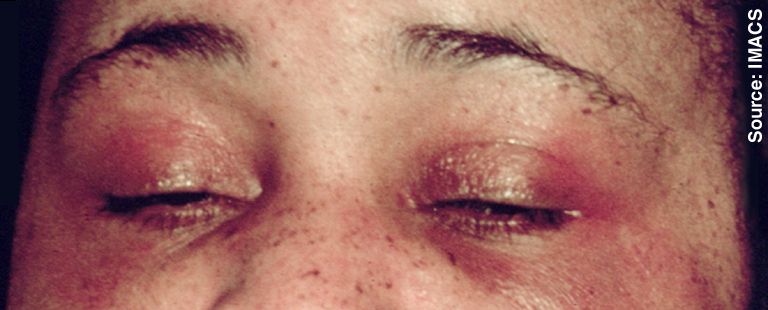
- Prolonged edema. Swelling that persists for months, or recurs cyclically, points to altered lymphatic drainage rather than normal post-injection inflammation. This late-onset periocular edema is a distinct complication - sometimes requiring a combination of hyaluronidase and collagenase rather than hyaluronidase alone, because the structural change in the tissue involves more than the filler itself.
- Patient dissatisfaction without complication. No visible problem, but the result is not what the patient wanted. The assessment here differs: dissolving correctly placed product will reveal the same underlying anatomy - including the original hollowing - that led the patient to seek filler. That conversation needs to happen before any enzyme is used.
What Hyaluronidase Does - and How Long It Actually Takes
Hyaluronidase is an endoglycosidase enzyme. It cleaves the glycosidic bonds that hold hyaluronic acid chains together, breaking long HA polymers into smaller fragments the body clears through normal metabolic pathways. The enzyme itself is gone from tissue within roughly two minutes - its half-life in tissue is that short. The chemical work it starts, however, continues for 24 to 48 hours after injection, as fragments continue to degrade and clear.
This gap between half-life and duration of action has a direct practical consequence: the full result of a session takes days to materialize, sometimes up to two weeks. Patients who see minimal change at 48 hours may still be in the middle of active breakdown. Reassessing before the two-week mark and re-dosing early risks stacking enzyme on a process that has not finished.
The Native HA Question
Hyaluronidase does not distinguish between injected filler and the naturally occurring hyaluronic acid in skin and connective tissue - it dissolves both. Patients sometimes notice temporary skin dryness or a brief sense of additional hollowing immediately after dissolution, because native HA in the treated area has also been degraded. Fibroblasts continuously synthesize new hyaluronic acid, so native HA replenishes within days. But this means that what looks like excessive hollowing at two or three days may be temporary, and reassessing at that point misreads the result.
Filler Brand Chemistry Changes Everything About Dosing
This is the detail almost no patient-facing guide explains. The dose of hyaluronidase required to dissolve a given volume of filler is not fixed - it depends on how the filler was crosslinked during manufacturing, and different brands use fundamentally different crosslinking technologies.
Biphasic vs. Monophasic Architecture
Restylane-family products are manufactured using a biphasic process, producing gel particles distributed through a carrier phase. The crosslinks are less dense, making the product accessible to enzymatic attack. Juvederm Vycross-platform products - including Voluma and Vollure - use a monophasic process with tightly interwoven, highly crosslinked HA chains engineered specifically for longevity. That longevity works against dissolution: published research indicates these products can require substantially higher cumulative doses than biphasic fillers for complete breakdown. Both in-vitro and in-vivo comparative studies confirm that Restylane-L and Restylane Lyft were among the most easily dissolved products tested, while Vollure, Voluma, Versa, Refyne, and Juvederm Ultra Plus all required markedly higher doses per unit volume.
| Filler Platform | Crosslinking Type | Relative Dissolution Resistance | Clinical Implication |
|---|---|---|---|
| Restylane-L, Restylane Lyft | Biphasic | Lowest - most enzyme-sensitive | Lower starting dose; risk of over-dissolving native tissue if aggressive |
| Restylane Refyne | Biphasic (XpresHAn) | Moderate - higher threshold than classic Restylane per published data | Staged dosing often needed for complete dissolution |
| Juvederm Ultra Plus | Monophasic | Moderate-high | Requires more enzyme per volume than biphasic products |
| Juvederm Vollure, Voluma (Vycross) | Monophasic, highly crosslinked | Highest - multiple sessions likely | Single session rarely achieves complete dissolution; conservative start, reassess at two weeks |
| Versa | Monophasic | High - similar to Vollure in head-to-head studies | Same staged approach as Vycross products |
When a patient cannot confirm what product was used - or when multiple products from different sessions have accumulated - the clinician must start conservatively, assess at two weeks, and re-dose as needed. Guessing at a high initial dose because a product might be highly crosslinked is not a substitute for staged conservative treatment.

Periorbital Anatomy: Why the Tear Trough Is Not Like Anywhere Else
The under-eye area presents anatomical challenges specific enough to change both the approach to injection and the realistic goals of dissolution.
- Thin skin. Periorbital skin is among the thinnest on the face. Filler placed at the wrong depth - or that has shifted upward - sits close to the surface, where it appears as Tyndall effect and is prone to forming palpable nodules.
- Lymphatic drainage. The periorbital region has a complex lymphatic network. Filler physically disrupts lymphatic channels in ways that can persist after the product is dissolved, explaining why late-onset edema sometimes outlasts the filler itself and may need treatment beyond hyaluronidase.
- Orbital septum proximity. The orbital septum separates the eyelid from the orbital fat. Filler that migrates posterior to the septum is significantly harder to dissolve, requires ultrasound guidance for targeted delivery, and carries a higher risk of incomplete removal with standard surface injection.
- Migration along tissue planes. HA filler in the tear trough tracks along natural tissue planes over time. A patient who had one syringe placed two years ago may have product distributed across a wider area than the original deposit, requiring a different distribution of enzyme across the zone.
Allergy, Skin Testing, and the Real Safety Profile
Published estimates place the rate of allergic reactions to hyaluronidase at between 0.05 and 0.7 percent of treated patients. True anaphylaxis is estimated below 0.1 percent. The published medical literature on allergy specifically in the context of dissolving HA filler contains only three case reports, covering four patients total. These numbers are not reasons to dismiss allergy as a concern, but they put the risk in proportion.
Why the Skin Test Is Not Recommended
Many patients have read that an intradermal skin test will be performed before hyaluronidase treatment. Current UK clinical guidelines - which reflect the most detailed regulatory thinking on this procedure - describe skin testing for hyaluronidase allergy as neither reliable nor valid. False positives are common; false negatives occur as well. More critically, the skin test itself can trigger a severe allergic reaction in patients with hymenoptera venom allergy - allergy to bee or wasp stings - because of cross-reactivity between bee venom hyaluronidase and the therapeutic enzyme.
Patients with known sting allergy should not receive a hyaluronidase skin test at an aesthetic clinic. They need an immunology referral for formal evaluation before any hyaluronidase procedure is considered. A brief intake question about allergies at the front desk is not adequate risk assessment for this group.
Post-Hyaluronidase Syndrome: What It Is and Who Is at Risk
Post-hyaluronidase syndrome is a clinically recognized phenomenon that received its formal name in a 2024 UK study of 90 patients. Eighteen percent experienced hollowing or skin laxity after dissolution. The cause is not overdosing the enzyme.
The most significant predictor of post-hyaluronidase syndrome was total prior filler volume - patients who developed hollowing or laxity had received a mean of 4 mL of cumulative filler before dissolution, compared to 1.5 mL in those who did not. The syndrome reflects tissue stretching and anatomical adaptation, not enzymatic excess.2024 UK clinical study on hyaluronidase outcomes, 90 patients
The mechanism matters for counseling. When cumulative filler volume is high - often placed across multiple sessions over months or years - the overlying skin and soft tissue stretch to accommodate the added volume. When that volume is dissolved, the tissue does not return to its pre-filler state. What appears as new hollowing after dissolution is often the original anatomy, now revealed, plus structural change that accumulated during the filler period.
- Patients with high cumulative filler volume in the periorbital area are at greatest risk
- Patients who have received staged top-up sessions over multiple years face this risk more than first-time dissolvers
- Thinner, less elastic periorbital skin reduces the tissue's ability to rebound after volume loss
- Patients originally treated to mask significant tear trough depth are most likely to see that depth return
Counseling in high-volume patients should include an honest framing: dissolution does not restore a pre-filler face. It clears product so the anatomy can be properly assessed and a better plan made.
The Dissolution Process from Start to Final Assessment
A well-run dissolution is a staged process, not a single appointment. Here is the sequence:
- Consultation and filler mapping. The clinician reviews the full injection history, any records of products used, and the clinical appearance of the treated area. Ultrasound scanning at this stage maps filler location, depth, and volume - critical when filler may have migrated or when the original product is unknown.
- Informed consent and risk discussion. This covers post-hyaluronidase syndrome, temporary loss of native HA, allergy risk, the realistic possibility of multiple sessions, and the two-week minimum reassessment window.
- Topical numbing. Adequate contact time with topical anesthetic before injection - periorbital skin is thin and sensitive.
- Injection. Hyaluronidase is delivered by direct deposit into identified filler pockets or via retrograde fan technique, depending on the presentation. Periorbital dosing guidelines call for conservative staged treatment in elective cases, with re-dosing deferred to follow-up rather than attempted in a single aggressive session.
- Massage. Gentle post-injection massage distributes the enzyme across the treatment zone.
- Observation period. The patient waits at the clinic for confirmation that no early allergic response is occurring.
- Post-procedure expectations. Some redness and swelling at injection sites is normal. Volume change is gradual - enzymatic activity continues for up to 48 hours, and meaningful change is typically visible over two to seven days.
- Two-week reassessment. The minimum waiting period before any further intervention. Filler breakdown can continue for up to 14 days; placing new filler before this window closes risks dissolving the fresh product with residual enzyme.
What to Expect at Two Weeks and Beyond
The two-week appointment requires careful interpretation. Some of what the patient sees at that point is the true anatomical baseline - the face without filler. Some may still reflect temporary loss of native HA not yet replenished. Some reflects the structural tissue change described by post-hyaluronidase syndrome. Distinguishing temporary hollowing that will continue to resolve from permanent structural change that will not requires a clinician who is not simply re-booking a filler appointment.
When re-filling is considered appropriate, published guidelines commonly recommend waiting a minimum of two to four weeks after dissolution before placing new product - check current guidance with your provider - and treating the patient as a first-time filler candidate: snap-back test for skin elasticity, skin thickness assessment, vector analysis of how the anatomy has changed since the original treatment. The face after dissolution is not the same face that existed before the original filler was placed, and product choice, volume, and injection depth should all be reconsidered from the beginning rather than replicated from a prior treatment plan.
Why Oculoplastic Expertise Changes the Outcome
Oculoplastic surgeons work at the intersection of eyelid anatomy, orbital surgery, and facial aesthetics - a combination directly relevant to periorbital filler dissolution. Where filler has migrated into the preseptal space or deeper orbital layers, surface injection of hyaluronidase without imaging guidance is blind treatment. The enzyme may not reach the target, partial dissolution may leave nodules, and re-dosing without knowing where the remaining product sits is imprecise. Ultrasound-guided delivery puts the enzyme where the filler actually is, and ultrasound at the follow-up appointment confirms whether dissolution is complete.
The overlap with blepharoplasty evaluation also matters. Some patients who present for dissolution have anatomical features - significant orbital fat prolapse, skin laxity, structural change - that no amount of filler or dissolution addresses. Part of a consultation in an oculoplastic setting includes assessing whether the original filler was masking a problem that surgery addresses better, and whether a plan built entirely around injectable treatment is the right framework for this patient's anatomy at this point.
A 2025 study showed that experienced clinicians using dose-appropriate technique in periorbital filler complications - including higher single-session doses where the clinical scenario called for it - achieved successful outcomes in the large majority of patients treated. The takeaway is not that high doses are universally appropriate; it is that matching the protocol to the specific clinical scenario, rather than applying a uniform approach, is what distinguishes experienced periorbital management from general aesthetic practice.
Frequently Asked Questions
How many sessions of hyaluronidase will I need?
It depends on the product, cumulative volume, and depth. Easily dissolved biphasic products may resolve in one session. Highly crosslinked Vycross-platform fillers often require staged sessions at two-week intervals, because the enzyme must work through denser crosslinks and a single dose rarely achieves complete dissolution. A conservative first session with reassessment is clinically safer than trying to dissolve everything at once, particularly in the thin periorbital skin.
Will hyaluronidase affect my natural tissue?
Yes - it dissolves native hyaluronic acid alongside the injected product. This can cause temporary skin dryness or a brief sense of added hollowing immediately after treatment. Native HA replenishes within days because fibroblasts continuously produce it, but this is part of why the two-week reassessment window exists. Judging the final result at 48 hours misreads temporary native tissue loss as a permanent outcome.
Is the skin test before hyaluronidase treatment safe and reliable?
Current clinical guidelines advise against routine intradermal skin testing because it is not reliably predictive of allergy and can itself trigger a reaction. Patients with bee or wasp venom allergy face a specific cross-reactivity risk from the skin test - this group needs an immunology referral before any hyaluronidase procedure, not a clinic-based skin test. Tell the clinician about any sting allergy before the consultation begins.
Can I have new filler placed right after dissolution?
No. Active enzymatic breakdown continues for up to two weeks, and placing fresh filler before that process ends risks dissolving the new product. Published guidelines generally recommend waiting a minimum of two to four weeks before refilling - many cite two weeks as a standard minimum, with more conservative approaches extending to four weeks - and the reassessment before any new treatment should approach the anatomy as if for the first time - product choice and technique should not simply replicate a prior plan.
What is post-hyaluronidase syndrome, and am I at risk?
Post-hyaluronidase syndrome is hollowing or skin laxity that appears after dissolution and is not caused by overdosing the enzyme. The 2024 UK study that characterized it found the main predictor was total prior filler volume - patients with more cumulative filler before dissolution were significantly more likely to experience it, because the tissue had adapted to that volume over time. Patients who have received multiple filler sessions over years are at the highest risk and should discuss this outcome specifically before proceeding with dissolution.
General information only, not medical advice. Individual anatomy and healing vary. See the disclaimer.