The story of Latisse begins in ophthalmology offices, not cosmetic clinics. When glaucoma patients using bimatoprost eye drops started coming back with noticeably thicker lashes, researchers recognized something worth pursuing: a drug designed to protect vision was rewriting follicle biology on the side. That observation eventually produced the only FDA-approved prescription medication for lash growth - and it brought along a set of side effects that most lash-focused coverage still glosses over, including one that matters enormously for anyone planning eyelid surgery.
The Accidental Discovery: From Glaucoma Drug to Cosmetic Prescription
Bimatoprost entered the U.S. market in 2001 as Lumigan, a prostaglandin analog ophthalmic solution approved for lowering intraocular pressure in patients with open-angle glaucoma or ocular hypertension. The clinical goal was straightforward: reduce pressure to protect the optic nerve. The lash thickening was collateral. Ophthalmologists doing follow-up exams noticed it, reported it consistently, and the signal was clear enough that Allergan pursued a formal cosmetic indication.
That path took seven years. In December 2008 the FDA approved bimatoprost 0.03% under the brand name Latisse specifically for eyelash hypotrichosis - inadequate or insufficient lashes. It was, and remains, the only prescription drug the FDA has cleared to grow eyelashes. Lumigan and Latisse share the same active ingredient - bimatoprost - but Lumigan has been available in a 0.01% formulation since a 2010 reformulation, while Latisse is 0.03%; the two carry different approvals, are delivered through different applicators, and present different practical risk profiles based on how and where each is applied to the periocular area.
What Eyelash Hypotrichosis Means and Who Qualifies
Hypotrichosis of the eyelashes covers three overlapping problems: lashes that are too short, too sparse, or too light. Causes include genetics, age-related follicle miniaturization, chemotherapy, alopecia, and chronic use of certain systemic medications. Latisse is approved for the cosmetic form of the condition in adults and has also been used in oncology settings to help patients recover lash density following chemotherapy.
Genuine candidates for the prescription rather than an OTC serum share a few characteristics:
- Persistent inadequate lash density that has not improved with conditioning products
- Willingness to maintain nightly use indefinitely, since results reverse after stopping
- No active intraocular inflammation and no history of uveitis or macular edema
- Light-colored eyes (blue, green, hazel) need a thorough informed-consent conversation about permanent iris pigmentation before starting
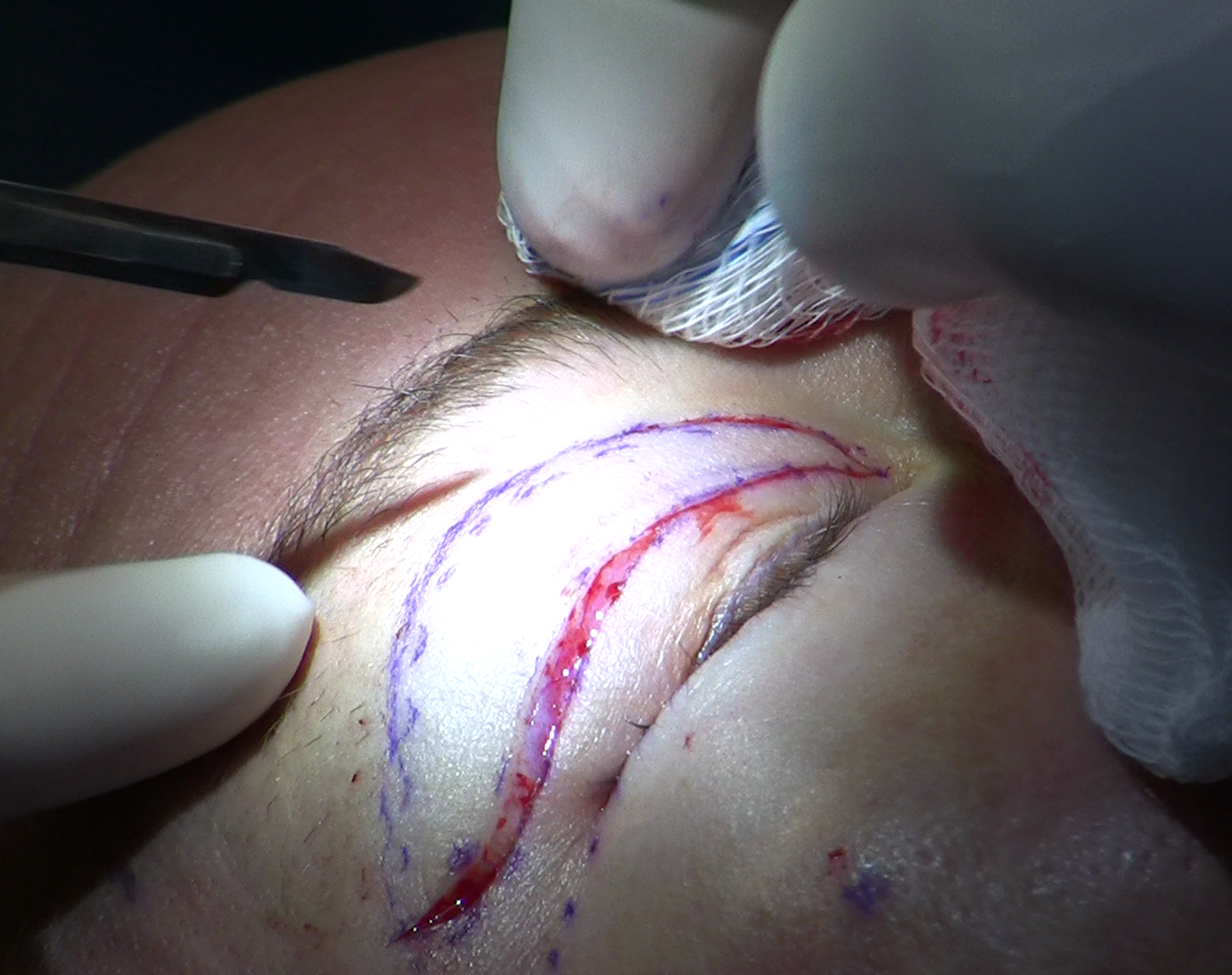
- Anyone planning blepharoplasty should disclose chronic Latisse use to their surgeon before surgical assessment - this detail affects the planning, not just the aftercare
Latisse is not approved during pregnancy or in patients under 18. The prescription model exists partly because those contraindications require a clinician's involvement - which is precisely what OTC analogs sidestep.
How Bimatoprost Works: Follicle Biology and the Anagen Phase
The three-phase follicle cycle
Every eyelash follicle cycles through anagen (active growth), catagen (transition), and telogen (rest). In a person with sparse lashes, the anagen phase is short and fewer follicles are active at any given time. Bimatoprost changes both parameters by acting on FP receptors expressed in follicle cells. It extends the duration of the anagen phase and recruits telogen follicles back into active growth, increasing the proportion simultaneously producing a lash. It does not create new follicles - follicle count is fixed. It gets more of the existing follicles working harder for longer.
Why results reverse when you stop
When someone stops using Latisse, the anagen phase shortens back to its natural duration and resting follicles return to telogen. Lashes do not shed dramatically - they simply stop being replaced as quickly. Return to baseline takes roughly four to twelve weeks for most patients, though some report up to six months. Lashes do not drop below the pre-treatment baseline; the follicles themselves are structurally unchanged.
The Clinical Trial Numbers: What 25% Longer Actually Looks Like
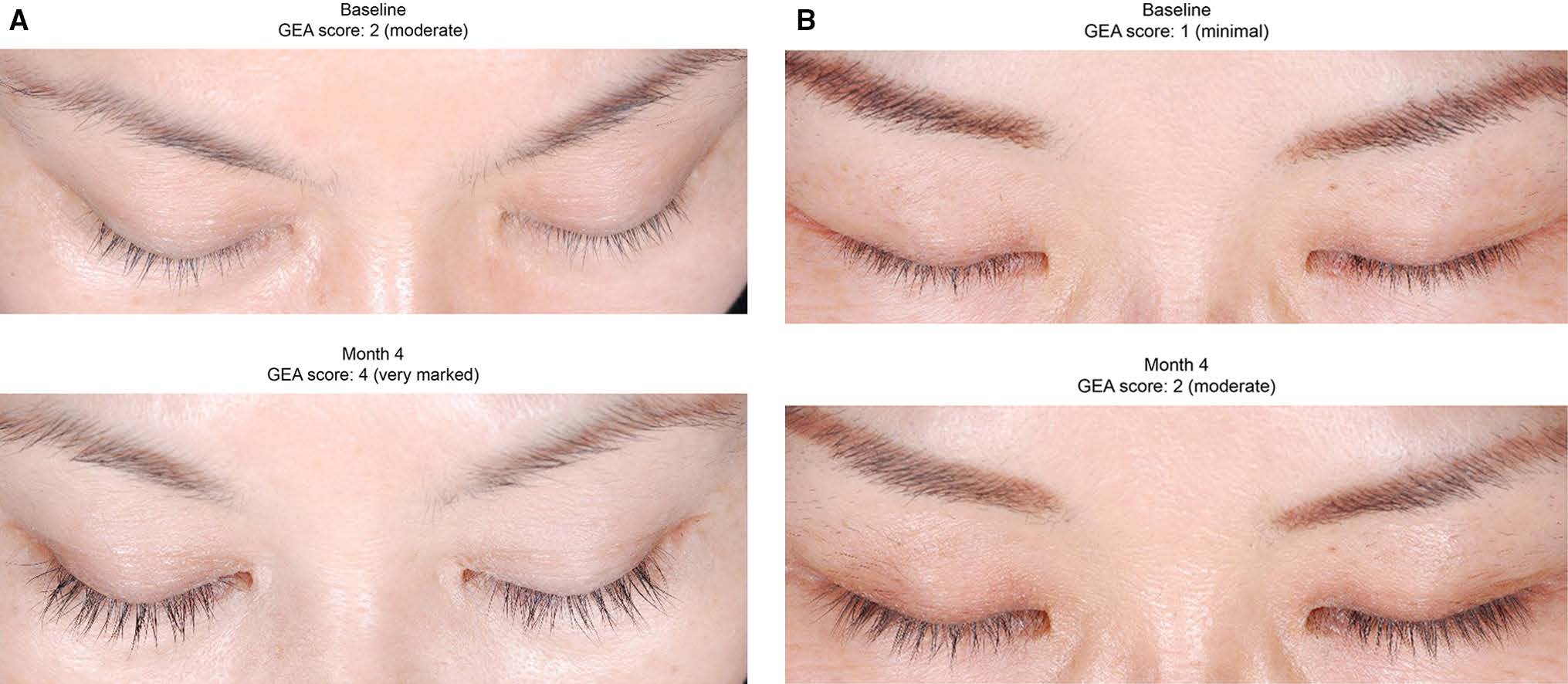
The pivotal 16-week randomized controlled trial measured improvement across three dimensions. By the endpoint, treated lashes measured 25% longer, were rated 106% fuller, and appeared 18% darker versus vehicle. Among active-treatment participants, 78% showed significant improvement in overall lash prominence compared with 18% in the placebo group.
What each figure means in practice:
- 25% longer - roughly two to three millimeters on most lash beds, visible in photographs and direct comparison
- 106% fuller - the most striking figure; reflects both individual lash thickness and the larger share of follicles simultaneously in anagen, together creating a denser lash line
- 18% darker - the subtlest change, largely imperceptible in patients with already dark lashes, but meaningful for blond or light-brown lash bases
Most patients notice a detectable difference by week eight. The full effect accumulates through week sixteen and requires continued daily use to maintain.
Periorbital Fat Atrophy: The Risk Almost Nobody Explains
The FP-receptor pathway in orbital fat
The FP prostaglandin receptor is expressed not just in the trabecular meshwork and in hair follicles, but also in orbital adipocytes - the fat cells that fill the upper eyelid sulcus and cushion the globe. When bimatoprost reaches those cells, it suppresses adipogenesis through the same FP-receptor pathway. The fat cells do not die; they shrink, losing lipid volume without changing cell count. Over months and years of repeated exposure, this produces measurably less orbital fat.
What prostaglandin-associated periorbitopathy looks like
The clinical syndrome has a name: prostaglandin-associated periorbitopathy, or PAP. Its hallmarks include:
- Deepening of the upper eyelid sulcus - the groove above the lid becomes more pronounced
- Apparent enophthalmos - the eye looks sunken even though globe position within the orbit has not changed
- Reduction in dermatochalasis - upper-lid hooding can appear to decrease, not because the skin tightened but because the fat volume behind it shrank
That last feature has a deceptive quality. A patient using Latisse for years might notice less upper-lid heaviness and credit the product. The tissue reality is the opposite: the structural support has diminished. Studies using glaucoma-dose bimatoprost report PAP findings in a substantial proportion of treated eyes, with published prevalence rates varying widely across cohorts - consult current ophthalmic literature or your prescriber for specific figures, as results differ based on how PAP is defined and measured. Among prostaglandin analogs used for glaucoma, bimatoprost carries roughly three times the periorbital fat-atrophy risk compared to latanoprost, another widely used analog in the same class. The difference is thought to reflect bimatoprost's stronger FP-receptor affinity.
Cosmetic dose versus glaucoma dose
The reassurance for Latisse users is real but partial. Glaucoma drops instilled onto the ocular surface enter the orbit through the nasolacrimal system and periocular absorption at a substantially higher dose than a cosmetic applicator delivers to the lash margin. Case reports of sulcus deepening in cosmetic Latisse users do exist. The risk is not zero with long-term use, and someone who has used Latisse daily for several years should not assume their orbital fat has been entirely unaffected.
Iris Pigmentation and Skin Darkening: What Reverses and What Does Not
Bimatoprost increases melanin synthesis inside existing iris stromal melanocytes - more pigment per cell, not more cells. Once that shift occurs, it is likely permanent. Light-colored eyes carry the highest risk because their melanocytes have room to upregulate production. Pure brown eyes see no visible change because melanin production is already maximal. A patient with hazel eyes who starts Latisse should understand that one eye may darken more than the other, potentially permanently, and should discuss this before beginning treatment.
Periorbital skin hyperpigmentation at the application site is a separate and more common finding. It is the most frequently reported cosmetic side effect and is generally reversible after discontinuation. It should not be conflated with iris pigmentation when discussing risk.
Latisse is the only prescription treatment FDA-approved to grow eyelashes - but its mechanism is a systemic prostaglandin pathway that affects multiple periorbital tissues simultaneously, not a localized follicle treatment. Understanding the full biology is essential before long-term use, particularly for patients considering eyelid surgery.Summary of Latisse prescribing information and published PAP literature
Latisse vs. OTC Lash Serums: FDA Approval, Prostaglandins, and What Peptide Serums Actually Prove
Many bestselling OTC serums - including GrandeLASH-MD and Rodan + Fields Lash Boost - contain isopropyl cloprostenate, a synthetic prostaglandin analog structurally related to bimatoprost. They are sold without a prescription, labeled as cosmetic products, and not subject to premarket drug review. In 2026 the EU Scientific Committee on Consumer Safety concluded that prostaglandin analogs used as cosmetic ingredients are not safe for that purpose - a significant independent finding that has received almost no coverage in mainstream beauty media. Peptide-based serums avoid this problem but lack randomized controlled trial evidence establishing meaningful lash growth. The absence of a known mechanism for harm is not the same as evidence of benefit.
| Product type | FDA approval for lashes | Active ingredient | Periorbital fat-atrophy risk | Controlled trial evidence |
|---|---|---|---|---|
| Latisse (Rx) | Yes | Bimatoprost 0.03% | Lower than glaucoma dose; case reports with long-term use | Pivotal RCT, 16 weeks |
| OTC prostaglandin serums | No | Isopropyl cloprostenate | Same mechanism class; unquantified; 2026 EU safety concern | None |
| Peptide-based OTC serums | No | Synthetic peptides | No known fat-atrophy mechanism | None |
| Bimatoprost glaucoma dose | No (approved for IOP) | Bimatoprost 0.03% | Highest; PAP reported in a substantial proportion of treated eyes across studies | Extensive glaucoma trials |
How to Apply Latisse Correctly
Correct application reduces both side effect risk and product waste. The steps are specific for a reason.
- Remove contact lenses and wash your face thoroughly - residual makeup or cleanser on the lash line increases the chance of product migration into the eye.
- Open one single-use sterile applicator per session; never re-use or share applicators, which can introduce bacteria to the ocular surface.
- Draw the applicator lightly along the upper lash margin at the base of the lashes - one pass per eye is sufficient.
- Blot any excess product that has spread outside the upper lash margin immediately with a tissue; liquid migrating onto the lower lid or periorbital skin stimulates unwanted hair growth and increases periorbital bimatoprost exposure.
- Do not apply Latisse to the lower lid margin directly - blinking transfers enough product to the lower lashes, which is why some lower lash improvement occurs without direct lower-lid application.
- Replace contact lenses at least 15 minutes after application.
More frequent application does not accelerate results. The follicle cycle runs on its own biology - once the FP receptor is activated, applying the product twice daily does not shorten the anagen-extension timeline. It does increase periorbital and systemic exposure. Once nightly as directed is both the evidence-based schedule and the lower-risk one. Eye pruritus (itching) and conjunctival hyperemia (redness of the eye white) were among the most frequently reported adverse events in clinical trials; both occurred in a small percentage of treated subjects and are generally mild and transient.
Latisse and Blepharoplasty: Timing, Disclosure, and Why Undisclosed Use Distorts Planning
When to stop before surgery and when to restart
Most surgeons ask patients to stop Latisse one to two weeks before blepharoplasty and wait several weeks post-operatively before resuming - practices vary, with some recommending four to six weeks and others waiting longer; confirm the timeline with your specific surgeon. The pre-operative window allows a cleaner assessment of orbital fat volume and sulcus depth without an active prostaglandin confound. The post-operative window reduces periorbital physiologic stress during the acute healing phase, when tissues are reorganizing around excised or repositioned structures.
Why undisclosed chronic use complicates surgical planning
The more consequential issue is long-term undisclosed use. When a patient has used Latisse daily for three to five years without informing their surgeon, PAP-induced sulcus hollowing may look indistinguishable from age-related orbital fat atrophy. Sulcus hollowing is one of the clinical findings that can lead a surgeon toward recommending fat grafting to restore upper orbital volume. If the hollowing is bimatoprost-driven and the patient stops post-operatively, some natural volume may return as the fat suppression resolves. Fat grafted into an orbit that then partially recovers its native volume is an overcorrection - a complication that could have been avoided with accurate history.
What to tell your surgeon if you have used Latisse regularly:
- How long you have used it - duration matters more than frequency, since fat atrophy accumulates over time
- Whether you have noticed any change in upper eyelid fullness or sulcus depth during the years of use
- Whether you ever stopped for a prolonged period and whether lid appearance changed when you did
- Whether you have applied bimatoprost along the brow margin for eyebrow growth - anecdotal evidence supports modest brow regrowth off-label, but the FP-receptor pathway in periorbital fat does not distinguish application site, and brow-area use carries the same fat-atrophy consideration
Frequently Asked Questions
How long does it take for Latisse to show visible results?
Most patients notice a detectable difference between weeks four and eight. The full cumulative effect builds through week sixteen, the endpoint of the pivotal clinical trial. Results require continuous use to maintain - improvements begin to reverse within four to twelve weeks of stopping.
Can Latisse permanently change the color of my eyes?
Yes, in a small percentage of patients with light-colored eyes. Bimatoprost increases melanin production inside existing iris melanocytes, and that pigmentation shift is likely permanent once established. Brown eyes see no visible change. This risk should be discussed with your prescriber before starting, not discovered afterward.
Are OTC lash serums with prostaglandin ingredients a safer alternative to Latisse?
They are unregulated, not safer. Products containing isopropyl cloprostenate share the same receptor-level mechanisms as bimatoprost and carry unquantified versions of the same risks without prescription monitoring. In 2026, the EU Scientific Committee on Consumer Safety found prostaglandin analogs used as cosmetic ingredients unsafe for that purpose. Peptide-based serums avoid this risk class but have not demonstrated meaningful lash growth in controlled trials.
Do I have to stop Latisse before eyelid surgery?
Most surgeons ask for a stop one to two weeks before blepharoplasty and a waiting period of several weeks post-operatively before resuming - the exact interval varies by surgeon, so confirm with yours directly. The more important step is disclosing your full Latisse history - including duration of use - well before the planning appointment, so your surgeon can accurately interpret what they are seeing in your orbital tissue.
Can bimatoprost cause the upper eyelid to look hollowed even at cosmetic doses?
Case reports confirm it can, though the risk is substantially lower than with glaucoma-dose eye drops. Long-term daily use is the key variable - occasional or short-term use presents minimal concern, while five or more years of continuous use warrants an honest assessment of orbital fat status before any periorbital procedure. If you have noticed your upper lids looking more hollow or defined over the course of using Latisse, mention this specifically to your surgeon.
General information only, not medical advice. Individual anatomy and healing vary. See the disclaimer.