No other cosmetic procedure broadcasts its recovery quite like blepharoplasty in the first week. The skin surrounding the orbit is the thinnest in the human body, and when surgery disturbs the capillaries and lymphatic channels beneath it, blood and fluid have nowhere to go but outward into visible puffiness and discoloration. Recovery guides address this, but most of them recommend the same short list of interventions without distinguishing what controlled trials actually support from what has simply become convention. This article reviews every intervention commonly used to manage postoperative edema and ecchymosis after eyelid surgery - grading the evidence behind each one and distinguishing what patients can do at home from options that require a conversation with the surgeon before the day of surgery.
Why the Periorbital Area Swells and Bruises so Dramatically
Eyelid skin measures approximately 0.33-0.36 mm thick - three to five times thinner than skin elsewhere on the face. At that thickness there is essentially no structural resistance to outward expansion of fluid, and the skin lacks the mass to conceal anything pooling beneath it. Even a small volume of escaped plasma or blood produces an immediately visible change.
Beneath that thin skin lies a layer of loose, areolar connective tissue with an open architecture that offers minimal resistance to fluid tracking through it. When surgery disturbs small capillaries and lymphatic channels, plasma and red blood cells move into this loose plane and spread rapidly, following the path of least resistance across the lid and into the surrounding periorbital space. The orbit itself functions as a basin, collecting descending fluid from the forehead and brow - so fluid that originates outside the direct surgical field can migrate downward and add to what is already there.
This combination - paper-thin skin, loose connective tissue, and a collecting basin beneath - is why blepharoplasty produces more visible periorbital change per unit of fluid than almost any other facial procedure. It is also why interventions that work best address these specific mechanics rather than general wound healing.
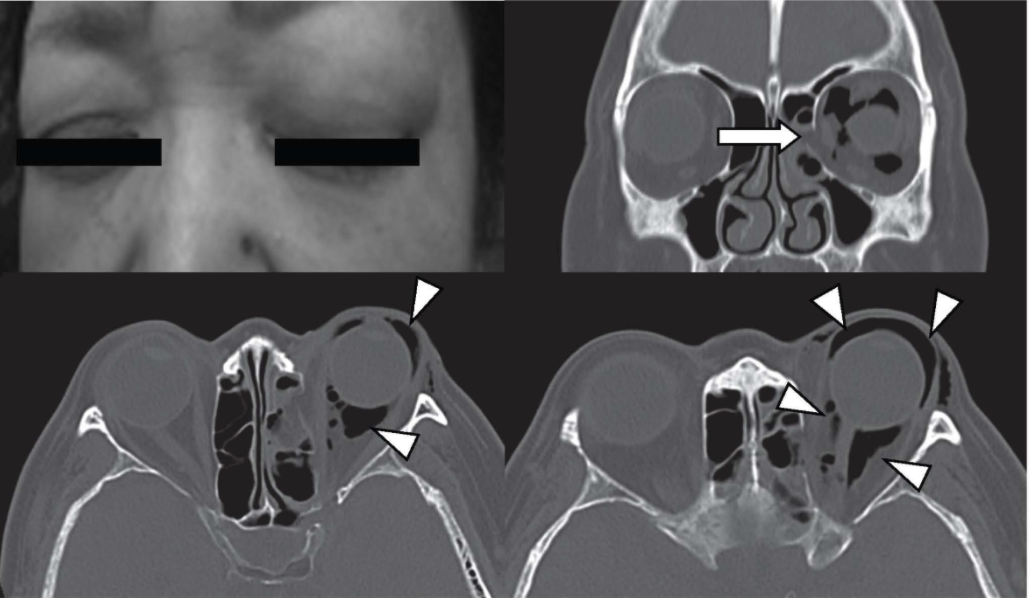
The Natural Timeline: What to Expect Week by Week
Swelling and bruising peak at 48-72 hours after blepharoplasty, not immediately after surgery. Patients who leave the recovery room looking less affected than expected frequently find the following morning alarming - fluid continues seeping into loose periorbital connective tissue even as the patient rests, and the full extent of the inflammatory response is not visible until the peak is reached. This pattern is normal and expected.
By days 5-7, bruising typically shifts from dark purple-blue to yellow-green as hemoglobin breaks down. Swelling begins to soften at the periphery, though the lids still feel tight. By the end of week two, most patients have passed through the visible bruising phase - evidence from controlled trials suggests the average duration of ecchymosis with no specific intervention is approximately 15 days. Residual soft swelling above the crease, particularly after lower lid procedures, can persist for six to eight weeks and resolves without treatment as the lymphatic system recalibrates.
Signs that warrant contact with the surgeon
- Sudden increase in pain, firmness, or swelling after a period of initial improvement - this pattern suggests hematoma
- Progressive asymmetry, with one side rapidly worsening while the other remains stable
- Vision changes of any kind at any point during recovery
- Increasing skin redness, warmth, or purulent discharge after day 3-4, which may indicate infection
- Inability to fully close one or both eyes at rest beyond the first 2-3 days
Cold Compresses and the Warm-Compress Transition
The cold phase: protocol and risk
Cold works by causing vasoconstriction - narrowing blood vessels and slowing the rate at which fluid leaks into surrounding tissue. This mechanism is most useful during the inflammatory phase, concentrated in the first 48-72 hours after surgery. The standard protocol in oculoplastic postoperative care is 15-20 minutes of cold application every waking hour during this window. The goal is consistent, repeated mild vasoconstriction, not prolonged or extreme cold exposure.
Following the protocol as an actual sequence makes the difference between consistent benefit and sporadic application:
- Chill saline gauze in cold water, or wrap an ice pack in a single cloth layer
- Lie back with the head raised to 30-45 degrees before applying
- Place the compress gently over both closed eyes with no pressure and no rubbing
- Leave in place for 15-20 minutes
- Remove, rest approximately 40 minutes, then repeat
- Continue every waking hour for the first 48-72 hours, then transition to warmth around day 4-5
The warm-compress transition: when and why
Few recovery guides discuss this shift, but it follows directly from physiology. Ecchymosis - bruising - is blood that has escaped vessels and pooled in tissue. The body clears it through macrophage activity and enzymatic breakdown of hemoglobin, processes that depend on local blood flow. Warmth promotes vasodilation, increases circulation to the area, and speeds delivery of the cells responsible for clearing extravasated blood. After 72 hours, cold loses its rationale - vasoconstriction is no longer the goal - and warmth becomes the more effective tool.
The transition in clinical practice is typically around postoperative day 4-5. A warm (not hot) compress applied for 10-15 minutes several times a day from that point onward helps remaining yellow-green discoloration resolve faster than rest alone. Hot compresses introduce burn risk to the same thin skin that is vulnerable to cold injury - the temperature should be comfortable to hold against the back of the hand.

Head Positioning - Why Two Full Weeks Matters
The 30-45 degree rule
Maintaining the head at 30-45 degrees during sleep and rest for the first two weeks uses gravity to drain lymphatic and venous fluid away from the orbit continuously. This is mechanically one of the most direct interventions available without a prescription, and the effects are visible: patients who maintain proper positioning consistently report less morning puffiness than those who abandon it after the first few nights.
Many oculoplastic surgeons recommend sleeping in a recliner for at least the first week. The reason is specific: patients who start the night propped on two or three pillows reliably roll onto one side or slide flat during sleep. A recliner maintains a fixed angle and prevents inadvertent side sleeping, which routes drainage toward whichever side is dependent and can produce asymmetric swelling.
Mistakes that extend swelling
- Abandoning elevation after the first 3-4 nights because discomfort eases - the two-week recommendation is not arbitrary
- Repeated bending forward during the day, which raises venous pressure in the head and counters gravity drainage
- Hot showers directed at the face, which cause vasodilation during the period when limiting vessel permeability is still the goal
- Sleeping on the side of the more-swollen eye, which both pools fluid toward that side and places direct pressure on the lid
Tranexamic Acid - What Patients Should Ask Their Surgeon About Before Surgery
Of all the interventions reviewed here, tranexamic acid (TXA) has the strongest evidentiary support and is the least likely to appear on a standard postoperative instruction sheet - because patients cannot access it at home. TXA is a synthetic amino acid derivative that inhibits fibrinolysis, the process by which the body dissolves blood clots. When small vessels are disturbed during surgery, the coagulation cascade forms clots that seal those vessels. Fibrinolysis would normally begin dissolving those clots within hours. TXA delays that process, allowing clots in small surgical vessels to remain intact longer and reducing the continued ooze into tissue that produces ecchymosis.
What the evidence shows
A systematic review and meta-analysis published in Ophthalmic Plastic & Reconstructive Surgery (PMID 41186300) examined TXA specifically in blepharoplasty and found it significantly decreased ecchymosis scores at postoperative days 1-3 and 7-9. The total duration of ecchymosis was shortened by roughly three days compared to placebo - a meaningful reduction from a single preoperative intervention. The full data are available through the cited publication.
Tranexamic acid has been studied in blepharoplasty both as an intravenous dose given intraoperatively and as a subcutaneous injection mixed directly into the local anesthetic; both routes produced significant ecchymosis reduction with no significant complications reported in the reviewed trials.Systematic review and meta-analysis, Ophthalmic Plastic & Reconstructive Surgery (PMID 41186300)
TXA is a surgeon decision. Because it is administered intraoperatively, the conversation must happen before surgery day. Another surgeon-administered option worth raising at the same appointment is perioperative dexamethasone, a corticosteroid given before surgery that controlled blepharoplasty trial data show significantly reduces both swelling and ecchymosis from a single dose. Patients particularly concerned about postoperative bruising can ask their surgeon about both options and whether either is part of their standard protocol.
Bromelain - What a 2026 Blepharoplasty-Specific RCT Showed
Bromelain is a mixture of proteolytic enzymes extracted from pineapple stem. It appears on many surgical recovery supplement lists, almost always cited generically without reference to any trial designed specifically for eyelid surgery patients. A 2026 randomized trial changes that picture substantially.
The study design and findings
Published in Aesthetic Surgery Journal (PMID 42728656), this trial was randomized, triple-blind, and placebo-controlled - the first RCT designed specifically to test bromelain in blepharoplasty patients. Forty-six patients undergoing upper blepharoplasty were assigned to oral bromelain at a fixed dose every 8 hours for two weeks, or matching placebo. Edema was the primary outcome. At postoperative days 3, 7, and 11, the bromelain group had statistically significantly lower edema scores than the placebo group. The specific dose used in the trial is detailed in the published paper; check with a surgeon before choosing an over-the-counter preparation, since labeling and concentration vary widely.
The trial also tracked ecchymosis. Bromelain showed a notable early effect on bruising, but the study was not sized to reach statistical significance for bruising as a secondary endpoint. A larger multicenter trial is needed before firm conclusions about bromelain and ecchymosis can be drawn.
The edema-versus-ecchymosis distinction
This distinction is important and rarely appears in patient-facing content. Edema is fluid - plasma that has leaked through vessel walls into tissue. Ecchymosis is blood - red blood cells that have escaped vessels and pooled under skin. They produce different appearances, they resolve through different mechanisms, and interventions may target one without meaningfully affecting the other. Bromelain's protease activity reduces inflammatory mediators and helps clear interstitial fluid, which explains its stronger effect on edema. TXA targets the clotting and fibrinolysis pathway, which explains its stronger effect on ecchymosis. Patients expecting any single supplement to fully address both are likely to be disappointed by what the evidence actually shows.
Arnica - What Controlled Trials in Eyelid Surgery Actually Show
Arnica montana may be the single most recommended supplement in blepharoplasty recovery - it appears on surgeon websites, in surgical recovery kits, and in patient instructions across the country. The evidence from controlled trials specifically in eyelid surgery patients does not support that level of confidence.
A systematic review of arnica montana in eyelid surgery found no statistically significant reduction in either edema or ecchymosis. A double-blind RCT that tested the combination of arnica plus bromelain against placebo in blepharoplasty-associated ecchymosis also failed to outperform placebo. This is not a minor caveat - these are studies designed specifically to answer whether arnica helps eyelid surgery patients, and the answer from those studies is that it does not.
Arnica is not harmful at standard doses. Patients who are already using it and want to continue can discuss that with their surgeon to check for any interactions with other medications. Those who have not started it are not omitting an intervention with established efficacy - attention would be better directed toward the options with actual trial support in this specific population.
What Makes Swelling and Bruising Worse
Several common behaviors actively undermine recovery during the first two weeks. Understanding the mechanism behind each one makes the restriction easier to follow and harder to rationalize away.
- Alcohol - causes vasodilation and increases capillary permeability, directly worsening both swelling and bruising. Oculoplastic surgeons uniformly recommend avoiding it for at least one to two weeks after surgery. Even moderate intake during the peak swelling period counteracts the effect of cold compresses and proper positioning.
- High dietary sodium - promotes systemic fluid retention. Because eyelid skin is thin and lax, even a modest shift in total body water produces visible periorbital puffiness that would not be noticeable elsewhere on the face. Low sodium intake during the first two weeks is mechanistically significant, not just cautionary habit.
- NSAIDs after surgery - non-steroidal anti-inflammatory drugs inhibit platelet aggregation, reducing the blood's ability to form stable clots in healing vessels. Surgeons typically restrict ibuprofen, naproxen, and similar agents for two weeks after blepharoplasty; acetaminophen is the standard alternative for postoperative pain management.
- Strenuous exercise - restricted for two full weeks because elevated heart rate and blood pressure increase perfusion pressure in periorbital vessels, raising the risk of re-bleeding into the surgical field. Light walking is typically permitted earlier; anything that causes exertion-related flushing is not.
- Sleeping flat - removes gravitational assistance from periorbital drainage and allows fluid to pool in the orbit overnight. The effects are visible the following morning and are entirely preventable with proper positioning.
- Heat exposure - saunas, steam rooms, and hot showers directed at the face cause vasodilation during a phase when limiting vessel permeability is still the goal. These should be avoided for the first two weeks.
Comparing Interventions by Evidence and Access
| Intervention | Primary target | Evidence in blepharoplasty | Administered by |
|---|---|---|---|
| Tranexamic acid (TXA) | Ecchymosis | Strong - systematic review and meta-analysis of RCTs | Surgeon (IV or subcutaneous) |
| Perioperative dexamethasone | Edema and ecchymosis | Good - controlled blepharoplasty trial | Surgeon (single preoperative dose) |
| Bromelain | Edema primarily | Moderate - one blepharoplasty-specific RCT (2026) | Patient with surgical clearance |
| Cold compresses + head positioning | Edema (first 72 hours) | Standard of care - physiological rationale well established | Patient |
| Warm compresses (day 4-5 onward) | Ecchymosis reabsorption | Standard of care - vasodilation mechanism | Patient |
| Arnica montana | Neither confirmed | Not supported by RCTs designed for eyelid surgery | Patient |
General information only, not medical advice. Individual anatomy and healing vary. See the disclaimer.